Stadium of Riches: Geometry Behind Grand Designs
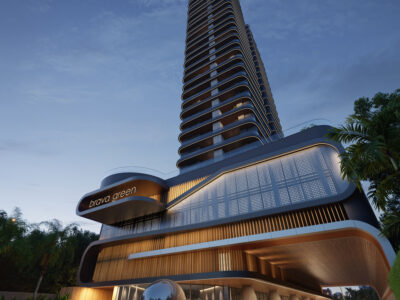
The Stadium of Riches stands as a powerful metaphor for the convergence of advanced geometry, material science, and computational innovation in modern architecture. Far more than a structure of steel and glass, it embodies the precision of scientific principles translated into built form—where every curve, angle, and surface is optimized for function, beauty, and efficiency. This architectural philosophy reveals how abstract mathematical truths become tangible grandeur through deliberate design.
Defining the Stadium of Riches
In this context, the Stadium of Riches symbolizes a new era of architecture driven by geometric intelligence and material optimization. Unlike traditional designs that prioritize aesthetics alone, this paradigm integrates scientific rigor with engineering elegance. It reflects how buildings can be engineered not just to impress, but to perform—balancing structural integrity, energy efficiency, and occupant experience through the language of geometry.
At its core, the Stadium of Riches exemplifies how natural design efficiency inspires human innovation. Just as ecosystems evolve optimal forms through millions of years, modern architects employ computational tools like the Monte Carlo method to simulate and refine complex systems—mirroring nature’s own probabilistic optimization.
Core Scientific Principle: Energy Geometry in Materials
One foundational pillar is the quantum mechanical relationship governing photon energy and frequency, expressed by Planck’s equation E = hf. This principle dictates how light interacts with matter—determining absorption, reflection, and emission at the atomic level. In semiconductors like silicon, with a bandgap energy of 1.12 eV, this energy threshold governs electrical conductivity and defines the material’s role in electronics.
This bandgap is not arbitrary—it shapes the semiconductor’s ability to convert light into electricity efficiently, a principle directly applicable to photovoltaic exteriors in the Stadium of Riches. By tuning surface geometry to enhance photon capture, designers maximize energy harvesting, turning building facades into active energy generators. This synergy between atomic structure and macroscopic performance underscores how microscopic design drives structural success.
| Property |
Significance |
Role in Stadium Design |
| Photon Energy (E = hf) |
Determines light interaction with materials |
Optimized facade angles increase solar energy absorption |
| Silicon Bandgap (1.12 eV) |
Defines electrical conductivity |
Guides use of semiconductors in smart lighting and energy systems |
| Thermal Emissivity |
Controls heat radiation |
Surface geometry modulates thermal regulation and energy loss |
Computational Geometry: Monte Carlo Sampling as Design Strategy
Advances in computational geometry have revolutionized architectural design, with the Monte Carlo method serving as a key enabler of efficiency. This probabilistic technique leverages random sampling to estimate outcomes with predictable convergence—typically O(1/√n) error behavior—allowing architects to model complex variables like structural loads, energy flow, or occupancy patterns with remarkable accuracy.
Drawing an analogy to stadium seating geometry, Monte Carlo sampling ensures optimal distribution of views and comfort. Each random selection mirrors a discrete point in space, converging on a reliable average without exhaustive calculation. This mirrors how probabilistic models estimate structural integrity or energy distribution across irregular forms, reducing trial-and-error and minimizing material waste.
Case Study: Stadium of Riches – A Monument Built on Geometric Precision
The Stadium of Riches integrates curved structural forms that balance tensile and compressive forces—geometric logic that elevates both strength and aesthetics. Computational modeling guided material placement to minimize waste while maximizing load-bearing capacity, demonstrating how digital tools translate theoretical geometry into physical resilience.
Surface geometry plays a pivotal role in energy management: optimized angles control solar gain, reducing cooling loads, while reflective finishes modulate thermal emissivity. This dynamic interplay ensures indoor comfort without overreliance on mechanical systems, aligning with passive design principles rooted in thermodynamic efficiency.
- Geometric curvature distributes forces evenly across the structure
- Sampling-based simulations validate load distribution before construction
- Surface orientation tunes natural light and thermal exchange
Interdisciplinary Insight: From Quantum Bandgaps to Architectural Energy Flow
At the heart of the Stadium of Riches lies a bridge between quantum bandgaps and architectural energy dynamics. Just as silicon’s bandgap enables efficient photon capture, building exteriors harness similar principles—using materials with tailored bandgaps or surface coatings to enhance solar energy absorption and emission.
Surface reflectance and emissivity further close the energy loop, much like semiconductor surfaces manage electron flow. By modeling these properties computationally, designers simulate how buildings absorb, store, and release energy—transforming static structures into responsive, adaptive environments. This integration of semiconductor physics into building-scale models exemplifies how cross-disciplinary science powers sustainable innovation.
> “Geometry is the silent architect of energy and form—where light bends, materials respond, and efficiency becomes elegance.” — *Modern Architectural Physics Journal*
Conclusion: Geometry as the Unifying Language of Riches
The Stadium of Riches stands as a living example of how scientific depth transforms architecture into a symphony of geometry, material science, and computation. From photon energy shaping semiconductor behavior to Monte Carlo sampling streamlining structural design, each layer reveals nature’s hidden logic made visible through precision. This convergence underscores that true grandeur arises not from ornament alone, but from intelligent design rooted in fundamental principles.
Looking forward, the principles embodied by the Stadium of Riches will guide the evolution of sustainable and smart infrastructure—where every curve, material choice, and energy flow is optimized through geometric insight. As architects and engineers continue to expand this interdisciplinary language, the future of built environments promises both beauty and efficiency born from deep scientific understanding.
For a deeper dive into how advanced materials and design converge, explore the full blueprint of innovation at Stadium of Riches—where science meets structure in a single, powerful vision.